How Agrivoltaics Help Farmers Face Frost and Extreme Weather
Frost events are becoming more frequent and unpredictable, posing a serious risk to crop productivity and farm income. Sudden temperature drops can damage blossoms, reduce yields, and in some cases destroy entire harvests within hours. As climate volatility increases, farmers are seeking solutions that do more than react to frost. They need systems that actively enhance resilience.
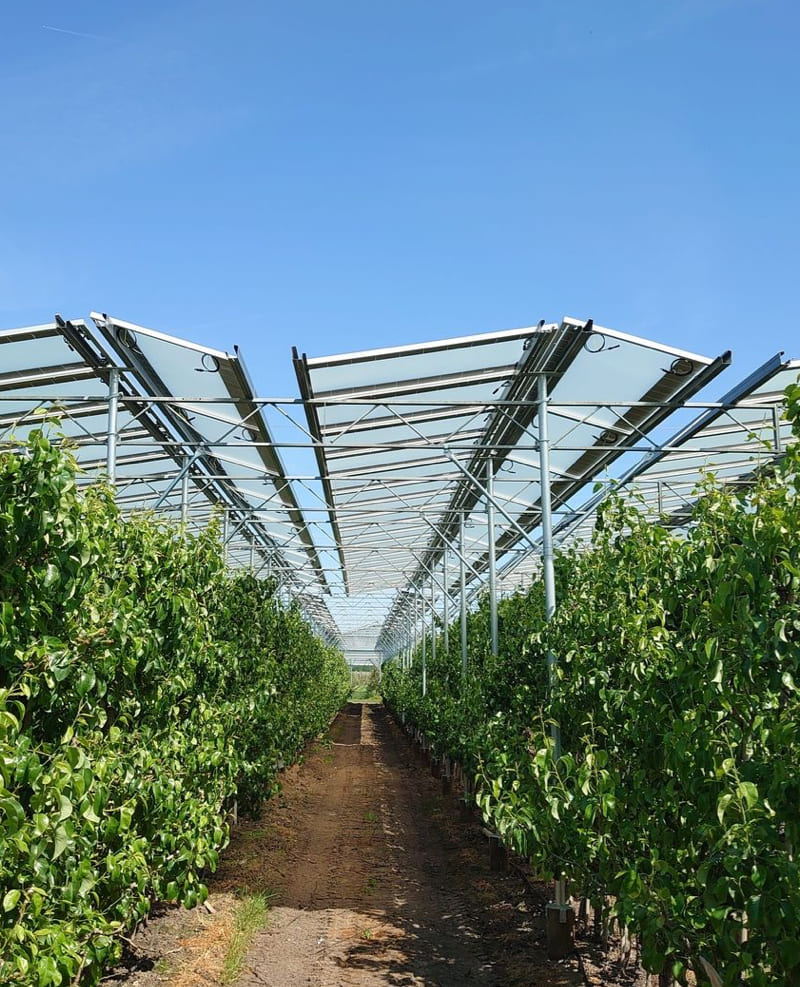
Agrivoltaics offer a practical and proven response to this challenge by combining agricultural production with solar energy generation. By integrating photovoltaic structures above crops, agrivoltaic systems modify the microclimate around plants, helping to buffer extreme temperature fluctuations.
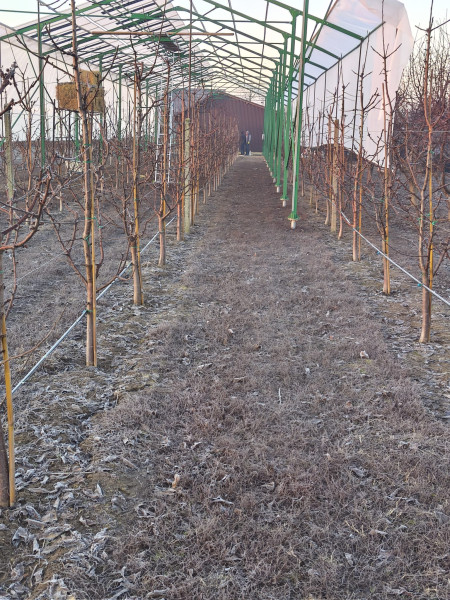
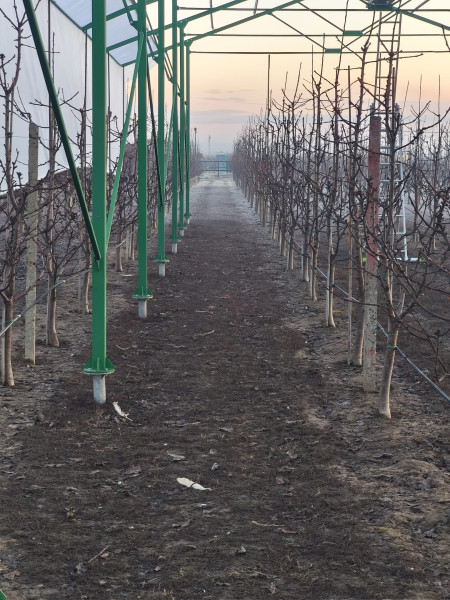
Real Field Evidence: Frost Protection in Practice
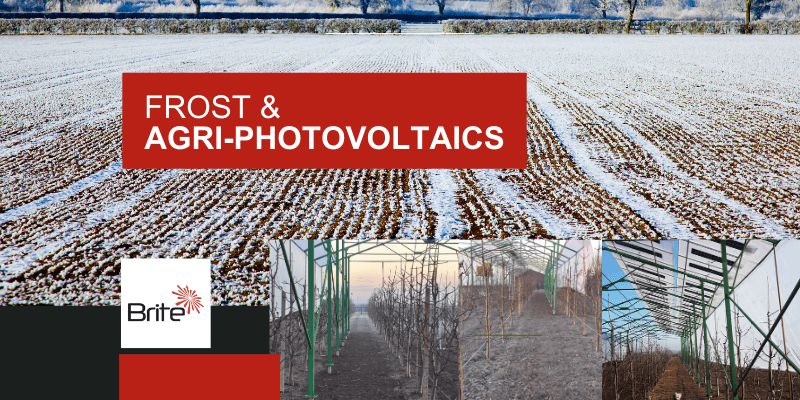
In real agrivoltaic installations in Romania, frost events provided clear comparative evidence. Cherry trees growing beneath agrivoltaic structures remained protected during severe frost, compared to trees in adjacent uncovered fields experienced extensive frost. The covered areas showed reduced ground-level freezing and less cold stress on both soil and crops.
This outcome is linked to the physical presence of the agrivoltaic structure, which limits heat loss during cold nights. As a result, it creates a more stable thermal environment.
Why Agrivoltaics Reduce Frost Risk
Agrivoltaic systems contribute to frost protection through several mechanisms. The elevated panels act as a thermal shield, reducing nocturnal heat loss. They also moderate wind exposure, which can otherwise accelerate temperature drops at crop level. In addition, the altered microclimate slows down sudden thermal shocks, giving crops more time to adapt.
Unlike temporary frost mitigation methods, agrivoltaics provide continuous, passive protection without additional energy consumption or manual intervention.
Additional Benefits Beyond Frost Protection
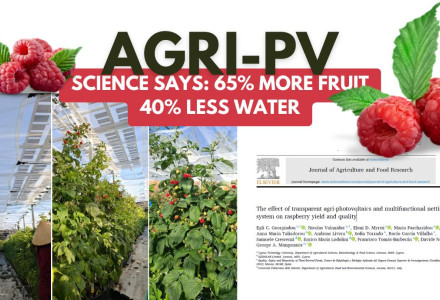
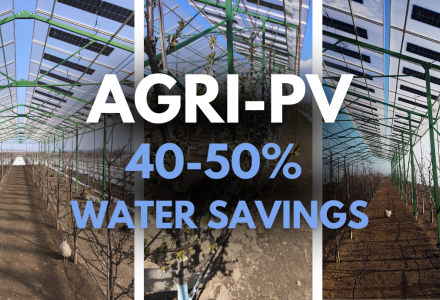
The benefits of agrivoltaics extend far beyond frost mitigation. By partially shading crops, agrivoltaic systems can reduce heat stress during summer, improve water-use efficiency, and stabilize growing conditions throughout the season. This results in healthier plants and more consistent yields.
At the same time, farmers gain access to renewable energy production. Electricity generated on-site can support farm operations, reduce energy costs, or contribute to an additional revenue stream. This dual use of land strengthens farm economics while maintaining agricultural productivity.
Agrivoltaics as a Climate-Resilient Farming Strategy
As extreme weather events intensify, agrivoltaics are emerging as a long-term adaptation strategy rather than a single-purpose technology. Frost protection, heat mitigation, energy autonomy, and climate resilience are all addressed through one integrated system.
For farmers, this means reduced exposure to weather-related losses and greater predictability in production planning. Agrivoltaics transform climate risk into a managed variable rather than an uncontrollable threat.
Brite Solar nanocoating technology
In the case of Brite Solar, agrivoltaic systems incorporate nanocoating technology specifically developed for agricultural applications. This nanocoating is designed to interact with incoming solar radiation by converting ultraviolet light into wavelengths within the red spectrum, where photosynthesis is most active. As a result, light quality reaching the plants is optimized without reducing overall transparency, while energy generation takes place simultaneously. The level of panel transparency is adjusted according to crop type and local climate conditions, ensuring compatibility with different cultivation requirements.
Contact the Brite Solar team
For more information about agrivoltaic applications and crop-specific solutions, contact the Brite Solar team.
email: info@britesolar.com
phone: +30 2310 321342